
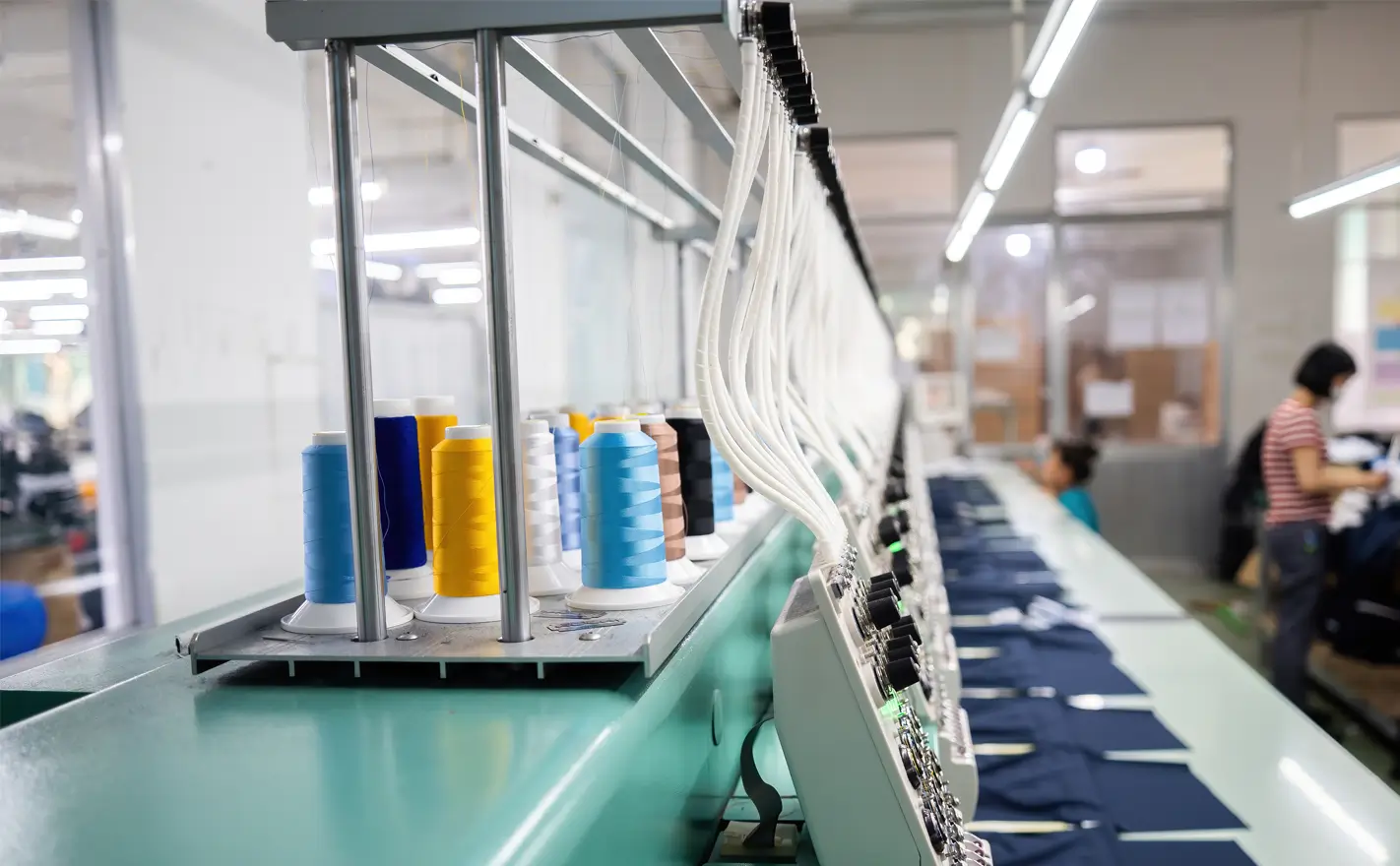
How India’s Textile Manufacturers Set Global Standards
Summary
Indian textile exporters are raising the bar globally by adopting rigorous quality standards, international certifications, and sustainable practices. This blog explores how sustainable textile manufacturers in India ensure every fabric and yarn meets global benchmarks consistently.
Introduction
Did you know India is the second largest textile exporter in the world, contributing over 12% of global textile trade? Yet the question buyers across Europe, the US, and Asia consistently ask is simple. Can Indian manufacturers truly deliver international quality at scale?
The answer is yes, and here is exactly how sustainable textile manufacturers in India are making it happen. From internationally recognized certifications to cutting-edge manufacturing technology, Indian textile exporters have built systems that not only meet but often exceed global quality expectations. This blog breaks down the key pillars behind that commitment.
What Makes Sustainable Textile Manufacturers in India Globally Competitive?
Indian textile manufacturers are globally competitive because they combine vertically integrated production with internationally recognized quality frameworks. Unlike fragmented supply chains in many countries, leading manufacturers in India control everything from raw fiber to finished fabric under one roof.
This vertical integration is a significant advantage. When a manufacturer manages spinning, weaving, sizing, and garmenting internally, quality control is applied at every single stage rather than being left to third-party suppliers. Aspire Textiles, based in Coimbatore, is a strong example of this approach, operating a fully integrated facility that produces premium yarns, greige fabrics, and export-ready garments with consistent quality benchmarks across all processes.
Which Certifications Do Indian Textile Exporters Use to Prove Quality?
Certifications are the most credible proof of quality in the global textile trade. The most widely recognized ones include GOTS (Global Organic Textile Standard), OEKO-TEX Standard 100, BCI (Better Cotton Initiative), and the Global Recycled Standard.
GOTS certification is particularly important for international buyers because it covers both environmental and social criteria across the entire supply chain. According to the Global Organic Textile Standard organization, GOTS certified products are processed without harmful chemicals and meet strict wastewater treatment norms. OEKO-TEX Standard 100 ensures that every component of a fabric, including threads and buttons, is tested for harmful substances.
For buyers sourcing from sustainable textile manufacturers in India, these certifications serve as a non-negotiable guarantee. They remove the guesswork and provide documented evidence that a manufacturer meets globally accepted production standards.
How Do Sustainable Textile Manufacturers in India Manage Quality at Scale?
Managing quality at scale requires more than good intentions. It requires systems, technology, and a culture of continuous improvement. Industry experts suggest that the most reliable textile manufacturers build quality checks directly into their production flow rather than treating it as an end-stage inspection.
Modern textile facilities in India are increasingly adopting smart automation, IoT-enabled monitoring systems, and AI-driven quality control to track production parameters in real time. This means deviations in yarn count, fabric construction, or GSM are caught and corrected immediately rather than after an entire batch has been produced.
Coimbatore, often called the Manchester of South India, has emerged as a hub for such technologically advanced manufacturing. The city is home to mills equipped with international-grade machinery from brands like LMW, Muratec, and Tsudakoma, ensuring precision at every production stage.
What Role Does Sustainability Play in Meeting International Quality Standards?
Sustainability and quality are no longer separate conversations in the global textile trade. Major international buyers, particularly from the European Union and the UK, now require suppliers to demonstrate environmental responsibility as a condition of doing business.
According to a 2023 report by the Textile Exchange, over 78% of global fashion brands have committed to sourcing from certified sustainable suppliers by 2025. This has pushed sustainable textile manufacturers in India to invest heavily in solar energy, water recycling systems, and zero liquid discharge technology.
A practical example is the adoption of closed-loop water management systems, where manufacturers recover and recycle up to 98% of wastewater, fully eliminating groundwater dependence. Combined with solar-powered operations that meet over 90% of energy needs, these practices are no longer just environmental gestures. They are now standard requirements in international procurement contracts.
Why Is Coimbatore Emerging as India’s Capital for Quality Textile Manufacturing?
Coimbatore’s rise as a global textile destination is not accidental. The city benefits from a deep talent pool of textile engineers, proximity to cotton-growing regions, and a well-established ecosystem of machinery suppliers, processing units, and logistics networks.
Leading fabric manufacturers in Coimbatore have built reputations for delivering consistent quality across cotton grey fabrics, viscose grey fabrics, PV blends, and specialty fabrics like Eli Twist. The combination of skilled craftsmanship and modern technology gives Coimbatore-based manufacturers a distinct edge in meeting the exacting demands of international buyers.
Conclusion
The global textile trade has never been more demanding, and sustainable textile manufacturers in India are rising to meet that challenge with purpose and precision. From internationally recognized certifications like GOTS and OEKO-TEX to smart automation and eco-conscious manufacturing, Indian exporters have built a quality infrastructure that stands up to the most rigorous global scrutiny.
For buyers looking to partner with a manufacturer that takes quality as seriously as sustainability, the answer increasingly points to India, and specifically to integrated facilities that control every thread of the process. If quality, reliability, and responsible manufacturing matter to your sourcing decisions, exploring what leading Indian textile exporters offer today is a conversation worth starting.
Frequently asked questions
Who are the leading sustainable textile manufacturers in India?
Leading sustainable textile manufacturers in India include vertically integrated facilities based in Coimbatore, Tamil Nadu, that hold GOTS, OEKO-TEX, BCI, and Global Recycled Standard certifications while operating with solar energy and zero liquid discharge systems.
What certifications should I look for when sourcing from Indian textile exporters?
When sourcing from Indian textile exporters, look for GOTS certification, OEKO-TEX Standard 100, BCI (Better Cotton Initiative), and Global Recycled Standard as these are the most widely recognized international quality and sustainability certifications.
How do sustainable textile manufacturers in India ensure consistent quality?
Sustainable textile manufacturers in India ensure consistent quality through vertically integrated production, real-time IoT monitoring, AI-driven quality control systems, multi-stage inspection processes, and internationally certified manufacturing practices.
Why is Coimbatore considered a hub for quality textile manufacturing in India?
Coimbatore is considered a hub for quality textile manufacturing in India because of its skilled workforce, advanced machinery infrastructure, proximity to raw material sources, and concentration of certified manufacturers producing premium yarns and fabrics for global markets.
What sustainable practices do Indian textile exporters follow to meet international standards?
Indian textile exporters follow sustainable practices including 90% solar-powered operations, closed-loop water management with 98% wastewater recycling, zero liquid discharge systems, organic and BCI certified cotton sourcing, and compliance with GOTS and OEKO-TEX environmental standards.
Recent Posts
Category
- Threads Quality
- Fabrics Types
- Manufacturing
- Import / Export
- Spinning Mills
- Cotten Threads